A developer's guide to LLM integrations in SaaS
How we design latency-tolerant architectures, streaming text layouts, and prompt pipelines for AI products.

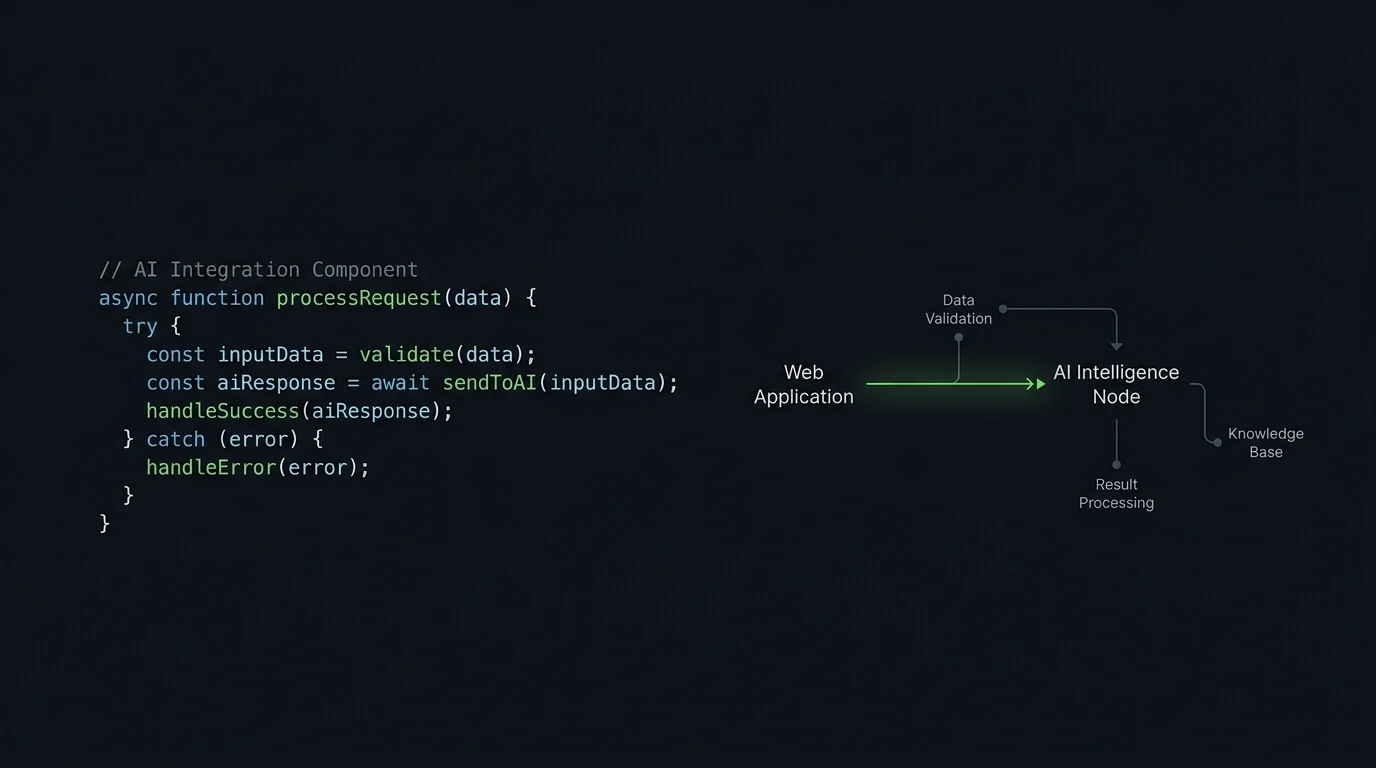
Integrating Large Language Models (LLMs) into SaaS applications involves much more than sending an API call. For developers, building AI products that feel fast, reliable, and production-ready requires design considerations around latency, security, and interface feedback.
1. Design Latency-Tolerant Layouts
LLM generations can take seconds to complete. Rather than keeping users waiting behind a loading spinner, use streaming responses to render text in real-time as it's generated. This gives users immediate visual feedback and improves perceived performance.
2. Standardize Prompt Pipelines
Keep your prompts decoupled from your core business logic. Use structured templates, version controls, and semantic tracking to refine and update prompts without having to rebuild the application.
3. Implement Robust Fallbacks
API latency spikes or rate-limits are common. Always define timeout thresholds and implement secondary model fallbacks or error messages that preserve user flow.